 |
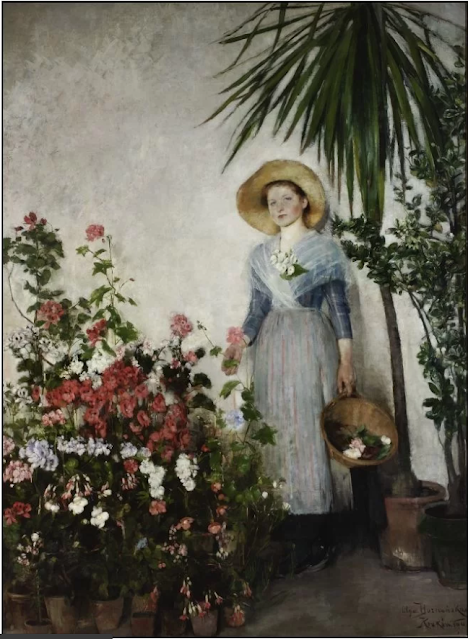
| Olga Boznanska |
A reader sent
in the note, below, which I reproduce without editorial comment. I thank the reader.
The original Polish is on top; the Google translate English is below that.
Dzień dobry i wszystkiego dobrego w
nowym roku!
Wybacz mi, że piszę po polsku, ale jest
to mój język ojczysty i jest mi najłatwiej wyrazić moje myśli i uczucia po
polsku.
Chciałabym Ci bardzo podziękować za to,
że zajęłaś się tematem stereotypu Polaka. Zrobiłaś to już wiele lat temu, ale
ta wiadomość dotarła do mnie dopiero kilka tygodni temu. Kilkakrotnie
wysłuchałam na YouTube filmików o konferencji w Łodzi w 2022 roku. Wtedy miałam
ochotę krzyknąć: Yes! Yes! Eureka!
To wszystko, co mówiłaś, to były rzeczy,
które ja od wielu lat intuicyjnie czułam, miałam wiele osobistych doświadczeń
związanych ze stereotypizacją Polaków i z niechęcią do Polaków ze strony
Niemców, Żydów i Amerykanów, ale nie potrafiłam połączyć moich doświadczeń w
całość (mieszkałam w Niemczech przez wiele lat, a także trochę podróżowałam po
Stanach Zjednoczonych). A Ty to
zrobiłaś, i to już dawno, a ja o tym nie wiedziałam! Oczywiście, od razu
kupiłam Twoją książkę o Biegańskim, która w Polsce jest teraz dostępna tylko
jako ebook, i zaczęłam czytać. Zaczęłam też czytać Twój blog o Biegańskim i
komentować niektóre posty jako AnnaD.
Muszę powiedzieć, że jestem przerażona!
Nie wiedziałam, że jest aż tak źle! Że Polacy są aż tak źle postrzegani, że
wręcz jest prowadzona taka „polityka”, aby pogłębiać i rozdmuchiwać obraz
Polaka, który jest prymitywny i głupi, nie ma kultury, jest antysemitą i
najbardziej pragnie mordować Żydów. W przeciwieństwie do eleganckiego,
kulturalnego, czystego i inteligentnego Niemca – nazisty, który kocha
Beethovena i czyta niemieckich filozofów. Niemcy są bardzo skuteczni w tej
„polityce pamięci”, a jej efektem jest coraz częstsze powtarzanie sformułowania
„polskie obozy zagłady” albo „polskie obozy śmierci”.
Mogłabym wiele opowiedzieć np. o obozie
śmierci Gusen, w którym zginął mój dziadek, o obozie, który został stworzony w
Austrii specjalnie dla Polaków, był to podobóz (po niemiecku „Nebenlager”)
niemieckiego nazistowskiego obozu Mauthausen. Obóz Gusen powstał na początku
1940 roku, jak już mówiłam – dla Polaków, którzy mieli zostać „zlikwidowani” w
ramach „Intelligenzaktion Polen”, akcji zaplanowanej na kwiecień 1940 roku (w
późniejszym czasie były w tym obozie też inne nacje, jak np. Włosi i sowieccy żołnierze).
Polskich tak zwanych „bandytów”, czyli między innymi polskich patriotów,
kierowano najpierw na 6 tygodni do niemieckiego obozu koncentracyjnego w
Dachau, a potem do obozu śmierci w Gusen, który był przez więźniów nazywany
„przedsionkiem piekła”. Nie będę opisywać teraz szczegółów, powiem krótko: Do
tego obozu trafił mój dziadek, ponieważ był polskim patriotą, i został tam
zamordowany we wrześniu 1941 roku.
Mogłabym także też wiele opowiedzieć o
tym, jak Niemcy zaraz od początku wojny w 1939 roku mordowali pacjentów
szpitali psychiatrycznych. Wtedy też została w brutalny sposób zamordowana
siostra mojej mamy, która miała wtedy 10 lat. Do mordowania pacjentów z tego
szpitala (w miejscowości Owińska koło Poznania) Niemcy użyli wtedy po raz
pierwszy – jako eksperyment – prymitywnych komór gazowych oraz samochodów z
gazem trującym do zabijania. Komory gazowe jako środek uśmiercania ludzi
zostały potem „udoskonalone” przez Niemców i stosowane w obozach
koncentracyjnych do mordowania między innymi Żydów. Ale najpierw mordowano w
ten sposób Polaków.
Mam też wiele do powiedzenia na temat
traumy transgeneracyjnej, ponieważ moje dzieciństwo upłynęło pod opieką dwóch
całkowicie straumatyzowanych kobiet – mojej mamy i mojej babci…
Kiedy wiele lat temu opowiedziałam o
tym, to znaczy o moim dziadku i mojej cioci,
Żydówce z Izraela (która na wstępie rozmowy oświadczyła, że nie lubi
wszystkich Polaków), ona powiedziała tylko: „I don’t believe you”.
Danusha, Danusiu, bardzo Ci dziękuję za
wszystko, co robisz dla Polaków. Jestem Ci za to niezmiernie wdzięczna. Gdybyś
chciała ode mnie więcej informacji o tym, co się u nas w Polsce dzieje, to
służę pomocą. Chociaż zapewne znasz dużo ludzi w Polsce i masz informacje „z
pierwszej ręki”. Z pewnością nadal będę śledzić Twój blog.
Przesyłam serdeczne pozdrowienia
Anna Drętkiewicz
Hello and a Happy New Year!
I would like to thank you very much for
addressing the subject of the Polish stereotype. You did this many years ago,
but this message didn't reach me until a few weeks ago. I listened to YouTube
videos about the conference in Łódź [The conference was actually in Warsaw] in
2022 several times. Then I wanted to exclaim: Yes! Yes! eureka!
All that you said were things that I had
intuitively felt for many years, I had many personal experiences related to the
stereotyping of Poles and the dislike of Poles by Germans, Jews and Americans,
but I could not combine my experiences into a whole (I lived in Germany for 15
years, and also traveled a bit around the United States). And you did it, a
long time ago, and I didn't know it! Of course, I immediately bought your book
about Bieganski, which is now only available as an e-book in Poland, and
started reading. I also started reading your blog about Bieganski and
commenting on some posts as AnnaD.
I must say I'm terrified! I didn't know
it was that bad! I didn't know that Poles are perceived so badly that such a
"policy" is even conducted to deepen and inflate the image of a Pole
who is primitive and stupid, has no culture, is an anti-Semite and most wants
to murder Jews. In contrast to the elegant, cultured, pure and intelligent
German - a Nazi who loves Beethoven and reads German philosophers. The Germans
are very effective in this "policy of remembrance", and its effect is
the frequent repetition of the phrase "Polish extermination camps" or
"Polish death camps".
I could tell a lot, for example, about
the Gusen death camp where my grandfather died, which was created in Austria
especially for Poles, it was a sub-camp ("Nebenlager" in German) of
the German Nazi Mauthausen camp. The Gusen camp was established at the
beginning of 1940, as I have already said - for Poles who were to be
"liquidated" as part of the "Intelligenzaktion Polen",
planned for April 1940 (later there were also other nations in this camp, such
as Italians and Soviet soldiers). Polish so-called "bandits", i.e.
Polish patriots, were first sent to the German concentration camp in Dachau for
6 weeks, and then to the death camp in Gusen, which was called by the prisoners
"the vestibule of hell". I will not describe the details, I will say
briefly: My grandfather was sent to this camp because he was a Polish patriot,
and he was murdered there in September 1941.
I could also tell a lot about how the
Germans murdered patients of psychiatric hospitals in Poland right from the
beginning of the war in 1939. It was also then that my mother's sister, who was
10 years old at the time, was brutally murdered. To murder patients from this
hospital (in the town of Owińska near Poznań), the Germans used for the first
time - as an experiment - primitive gas chambers and cars with poison gas for
killing. Gas chambers as a means of killing people were later
"improved" by the Germans and used in concentration camps to murder,
among others, Jews. But first Poles were murdered in this way.
I also have a lot to say about
transgenerational trauma, because my childhood was spent in the care of two
completely traumatized women - my mother and my grandmother ...
When many years ago I told about it,
that is, about my grandfather and my aunt, a Jewish woman from Israel (who at
the beginning of the conversation stated that she did not like all Poles), she
only said: "I don't believe you."
Danusha, Danusia, thank you very much
for everything you do for Poles and for Poland. I am extremely grateful to you
for that. If you would like more information from me about what is happening in
Poland, I am here to help. Although you probably know a lot of people in Poland
and you have first-hand information.
I will certainly continue to follow your
blog.
About language skills: I speak and write
fluent in German and of course in Polish, but I have a bit of a problem with
writing in English. But I'm doing my best.
I send you my best regards
Anna Drętkiewicz